The Off-Grid
Well Finder
The Complete Rural Water Manual

Water for life on your land, without getting ripped off.

Find the water under your land, get it out of the ground yourself where you can, hire a driller the smart way where you can't, and keep your well running for decades.

  • 136 illustrated pages
  • 14 technical diagrams
  • 15 chapters + 4 printable appendices
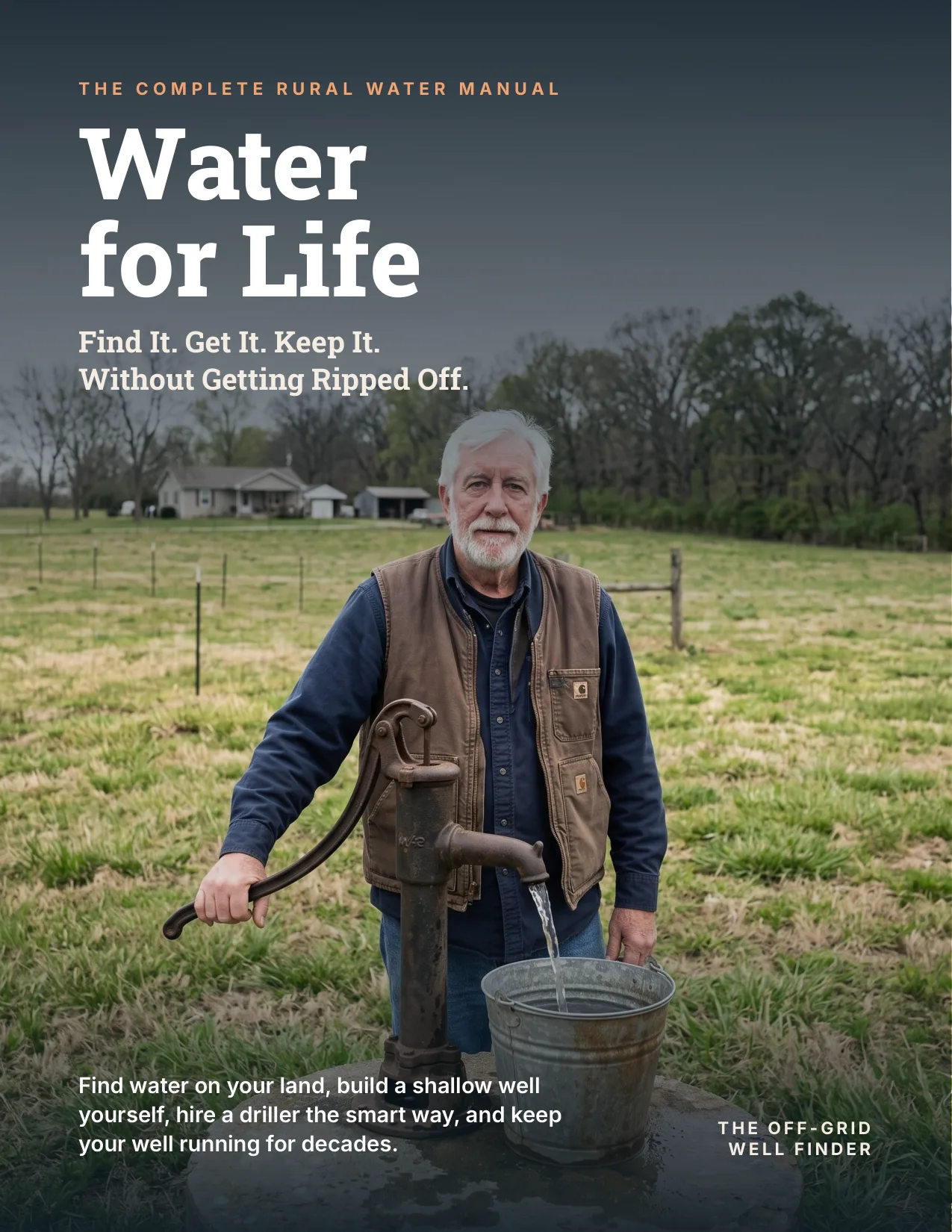
Water for Life book cover
Instant PDF download
Print-ready, US Letter

The most expensive word in rural life is "probably."

"There's probably water down there." "It's probably the pump." "You'll probably have to go deeper." Every one of those sentences comes with a bill, and the person saying it is usually the one sending it.

Most of what the trade knows about water isn't secret. It's written down in state well records, extension service guides and EPA and CDC publications. Nobody ever put it in one place, in plain English, for the person who owns the land. This book does.

Start wherever you are

One book, three kinds of landowners

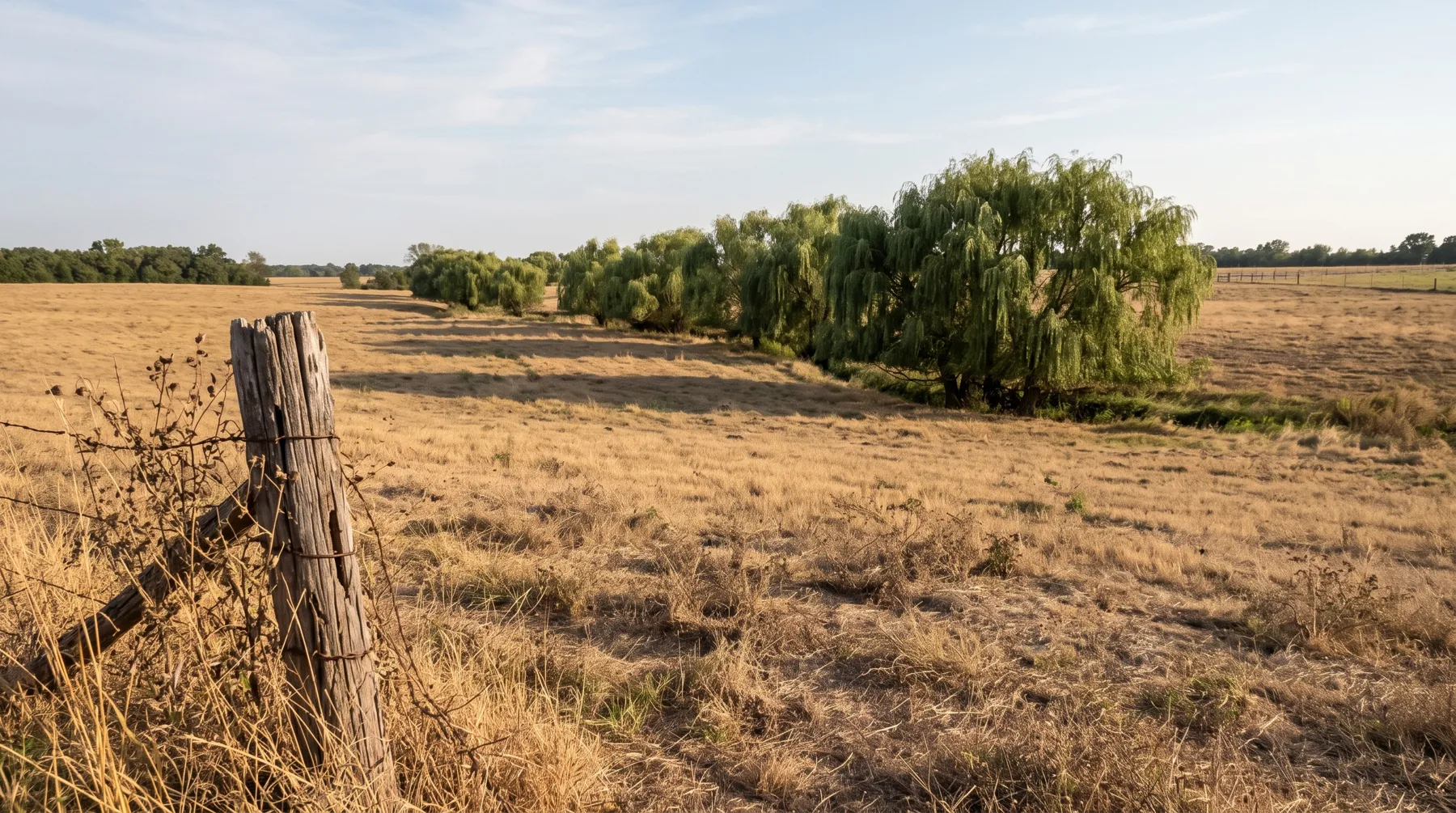
A line of willows across a dry pasture
No water yet

"Is there water under my land, and how deep?"

Learn to pull your neighbors' well logs for free, read what the land is telling you, and take the one-page test that tells you which road fits your property before you spend a dime.

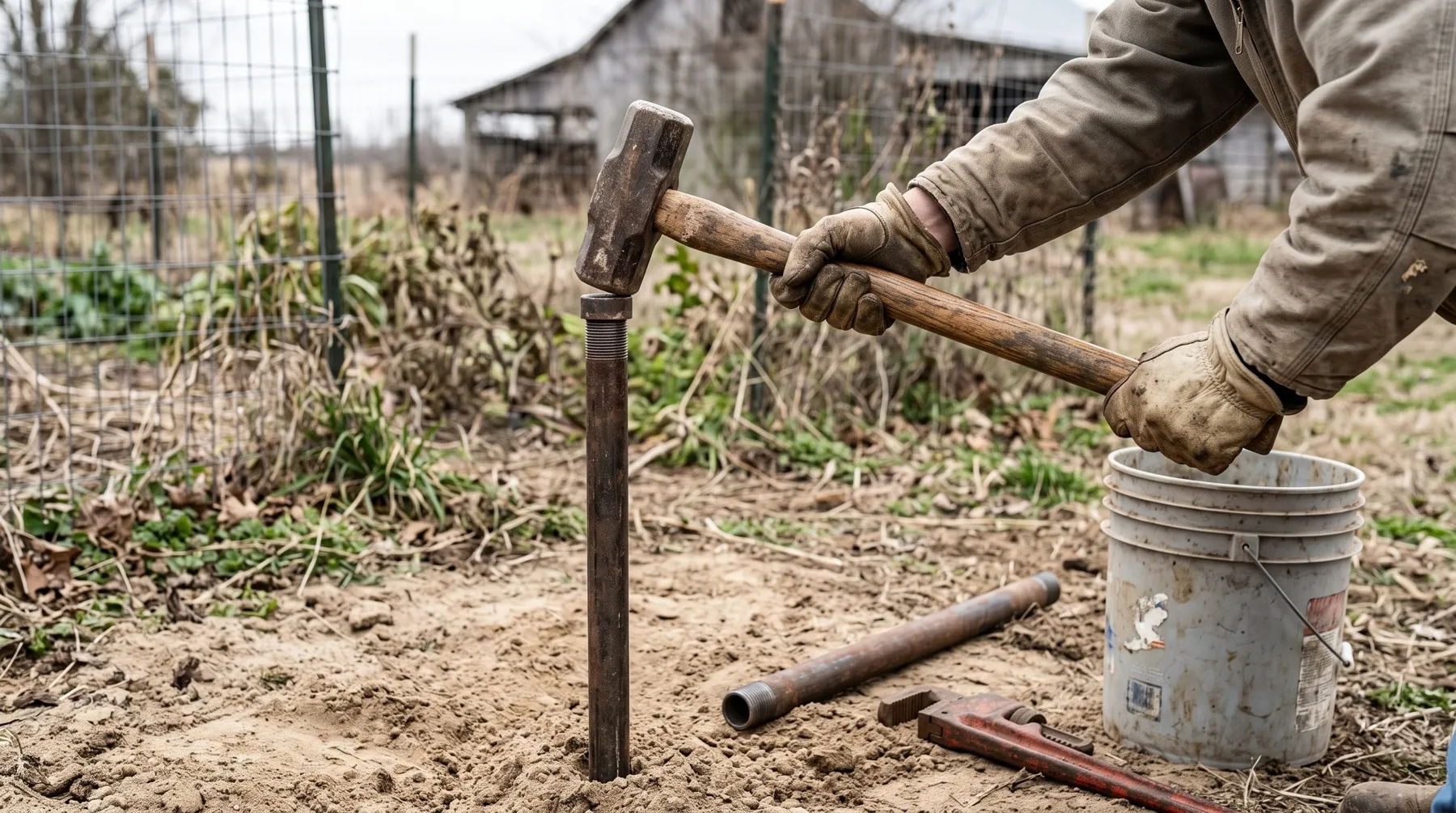
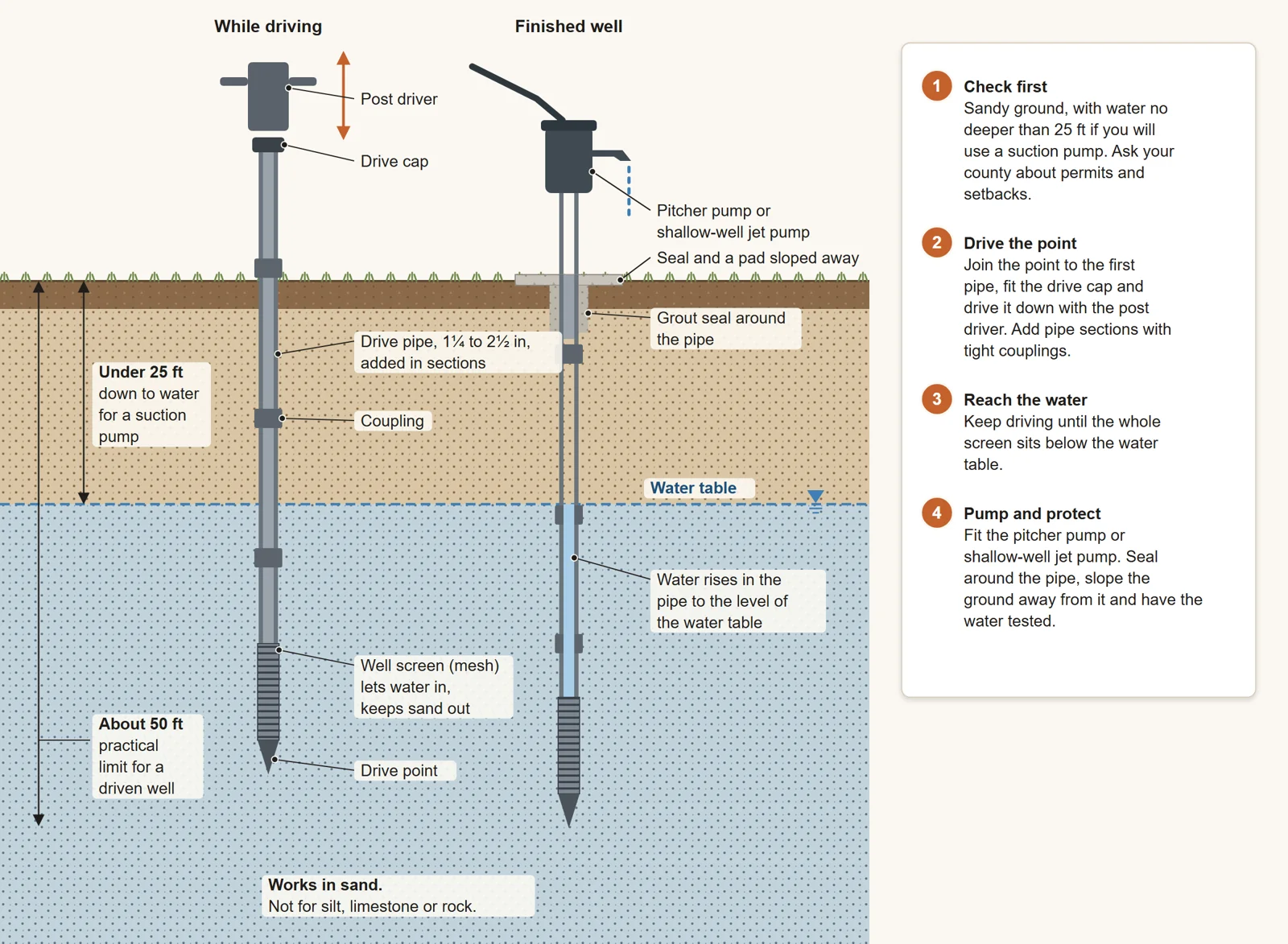
Driving a sand point well by hand
Ready to build

"Can I get water out of the ground myself?"

Six low-cost ways to reach shallow water, step by step: sand point, hand-dug well, spring box, hillside seep, ram pump and rain backup. When a drilled well is the only answer, you'll know exactly how to hire one.

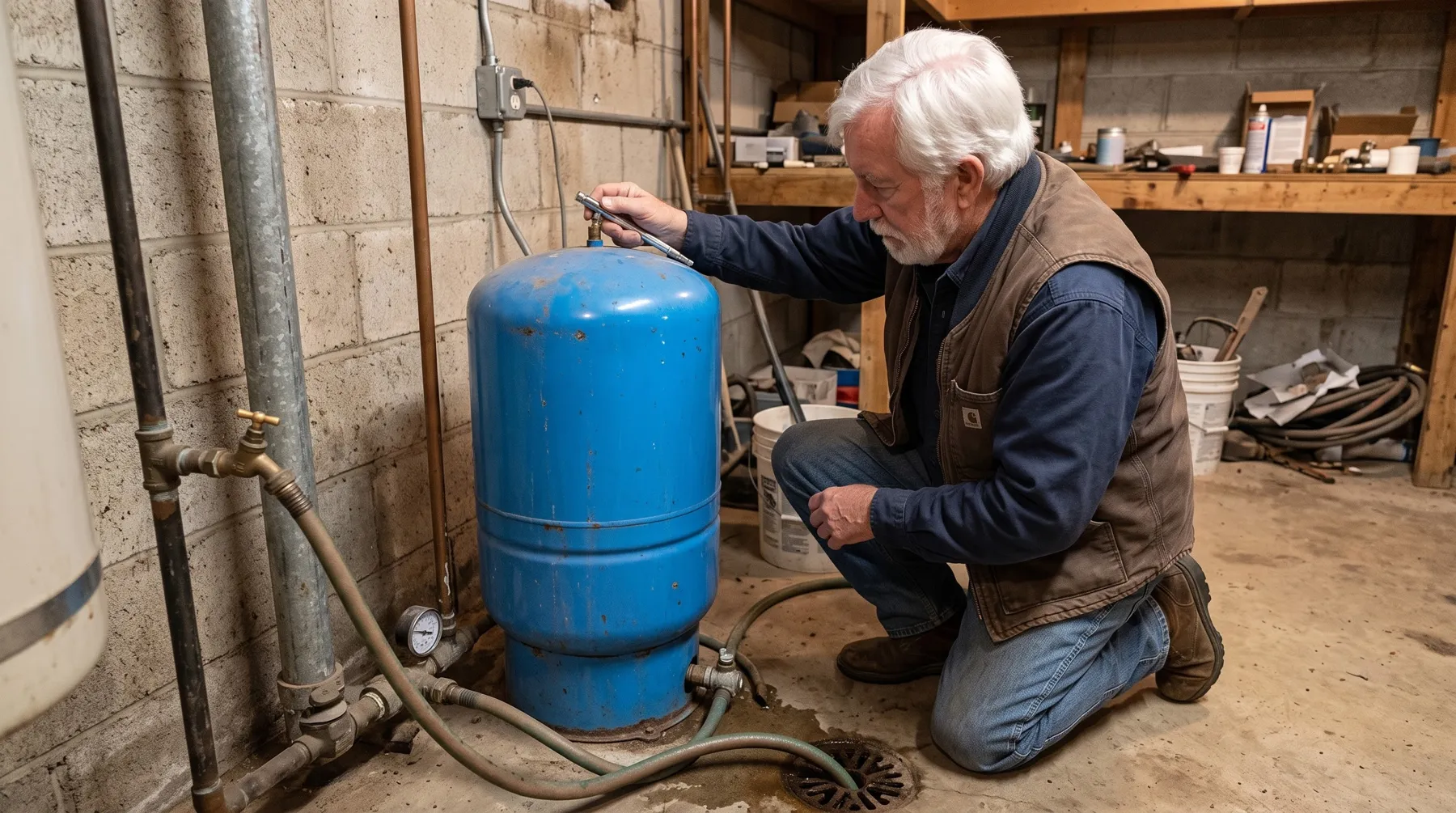
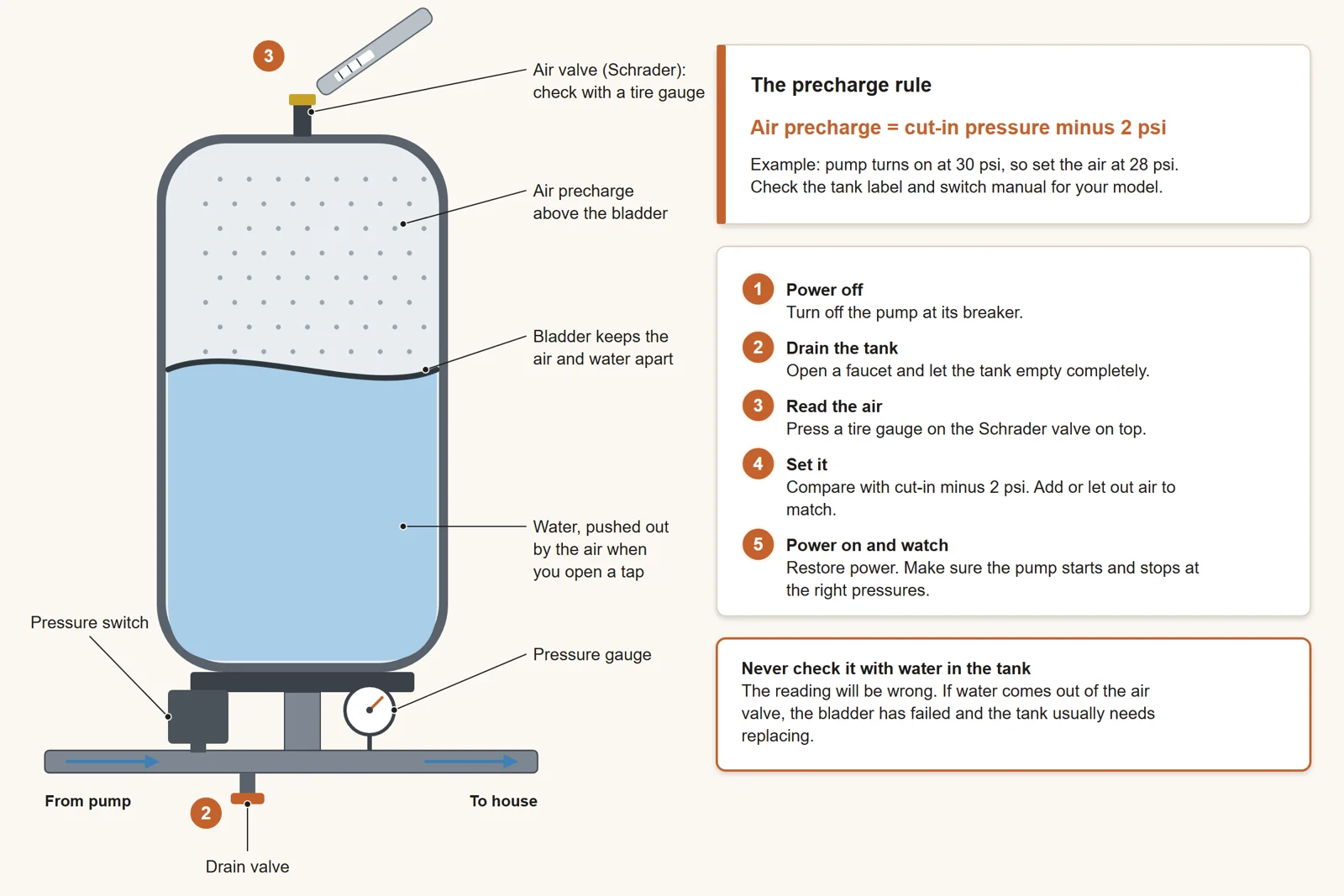
Checking the air charge of a pressure tank
Already have a well

"Something's wrong. Is this a $40 fix or a pro?"

Find your symptom, follow it to the likely cause and the safe check, and know whether to grab a tire gauge or pick up the phone. Plus testing, chlorinating, dry spells and help programs.

What's inside

Find it. Get it. Keep it.

Part OneFind It
  1. Your Free Water Map. Where every state keeps its well logs, and how to pull the ones near you from your kitchen table.
  2. Reading the Land. Green patches, seeps, springs and water-loving plants: what they really mean, and what science says about water witching.
  3. What Is Under Your Feet. Aquifers, depth and hard layers like clay and fragipan, in plain English.
  4. Can I Do This Myself? The one-page land test that sends you to a spring, a shallow well, a driller or rain backup.
Part TwoGet It
  1. Legal First. Permits, who may build a well, water rights and setbacks, plus a method for finding your state's rules in one afternoon.
  2. DIY for Shallow Water. Six low-cost methods with materials lists, steps, common mistakes and honest limits.
  3. When You Must Drill. Real cost ranges, how to get three honest quotes, the 15 questions to ask every driller, and what the contract must say.
  4. Pumps and the System. Manual, submersible, jet and solar pumps, and how to size a pressure tank.
Part ThreeKeep It
  1. The Breakdown Tree. Short cycling, low pressure, no water, air, sand, rotten-egg smell, stains and high electric bills, each from symptom to fix.
  2. The Pressure Tank. The 2-psi rule and how to check it safely, with the tank empty.
  3. Shock Chlorination. The full procedure, with the dosing done right and the times it shouldn't be done at all.
  4. Well Cap and Floods. The small part that keeps bacteria out, and what to do after high water.
  5. Testing Your Water. What to test, how often, and how to find a certified lab.
  6. Winter, Drought and the Dry Well. Diagnose before you deepen, and the storage-tank trick: 1 gpm = 1,440 gallons a day.
  7. Money. USDA repair help for rural homeowners 62+, disaster aid, insurance questions, and the "free government money" scams to avoid.

Appendices: plain-English glossary · personal well log · annual maintenance checklist · how to find your state agency and lab

Look inside

Built like a manual you'll actually use

Large, readable type. Numbered steps. Safety boxes you can't miss. Checklists you can print and take outside.

14 technical diagrams

See what's happening underground

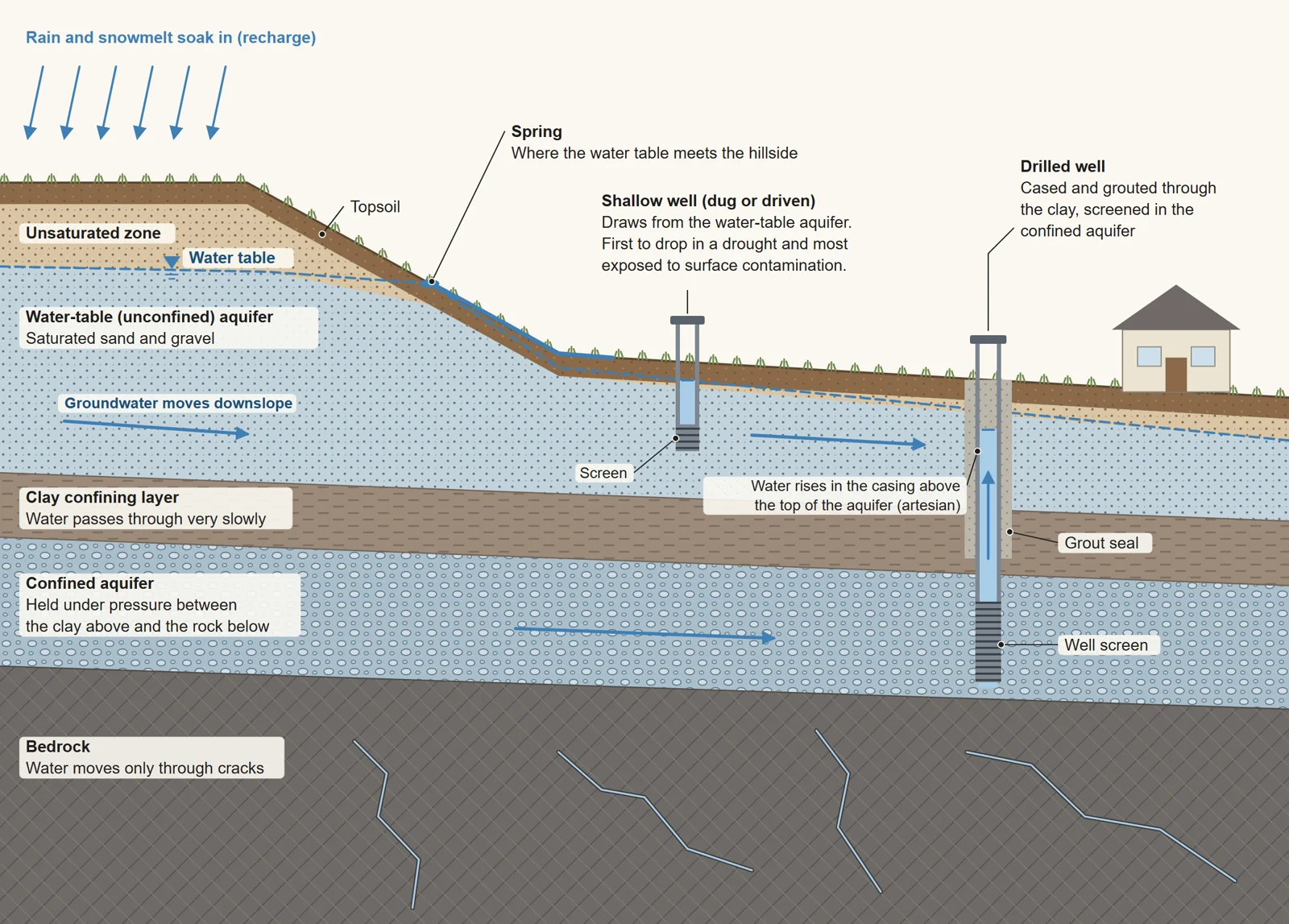
Aquifer cross-section
How water sits underground
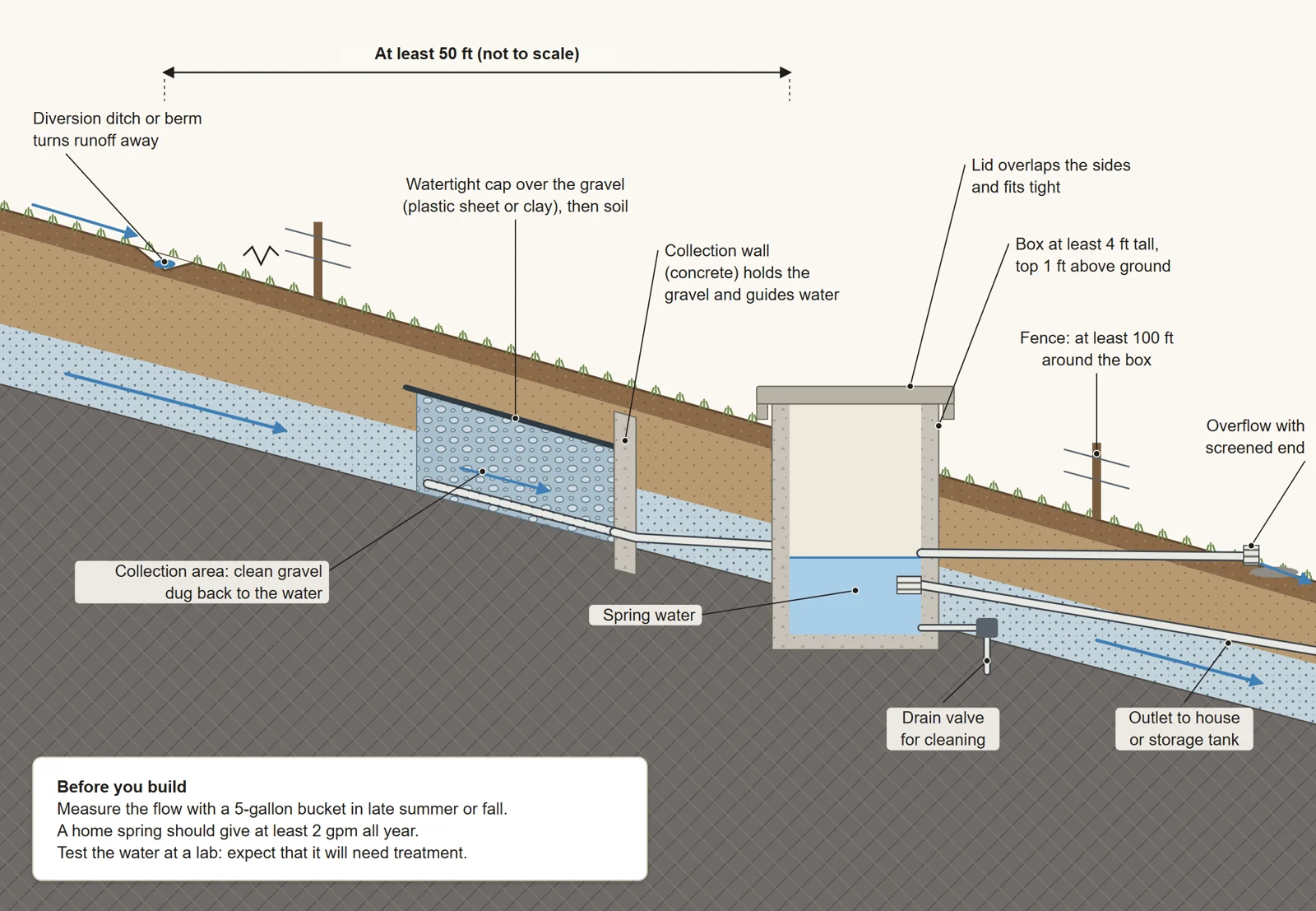
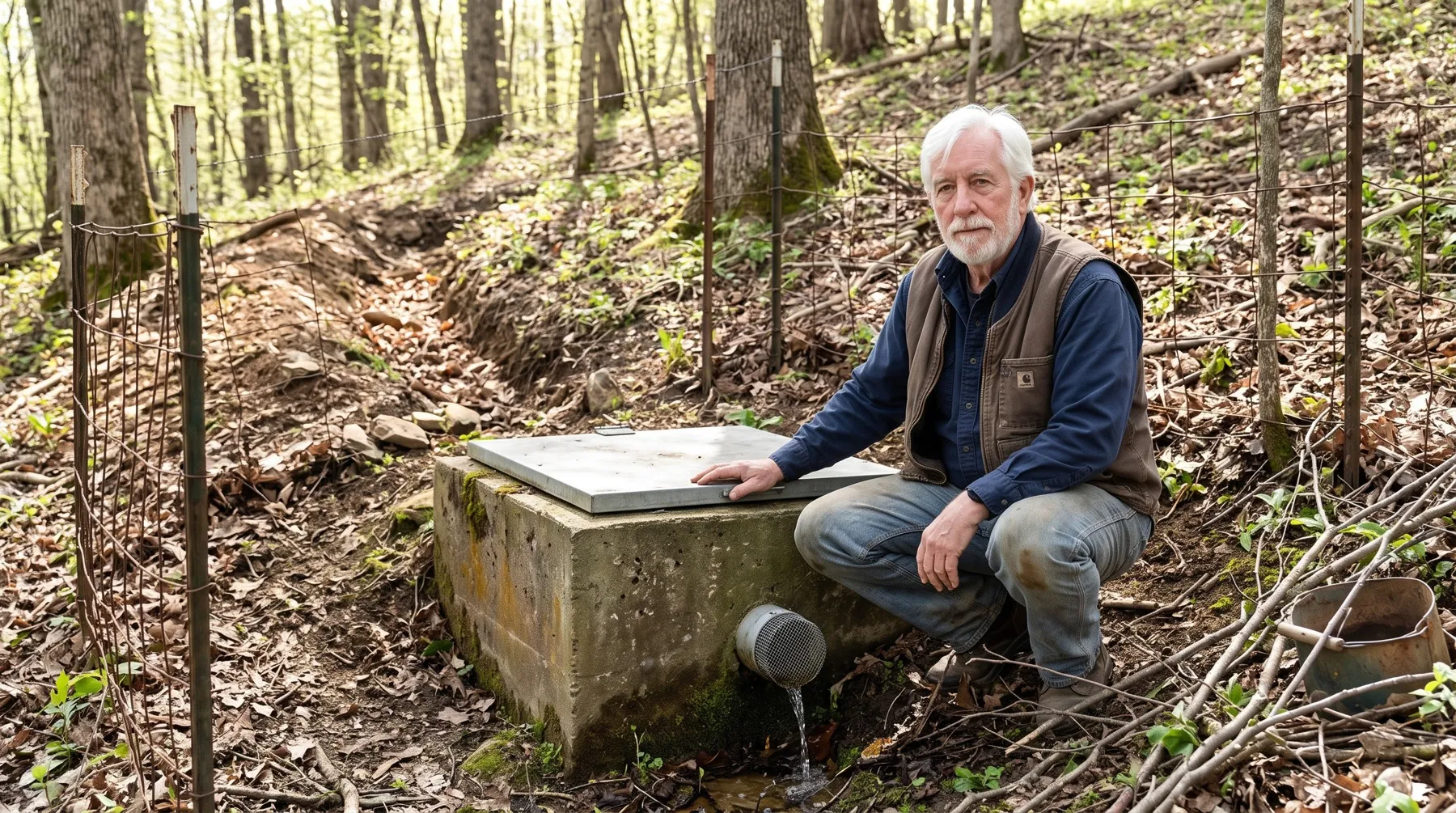
Spring box cross-section
A spring box, done right
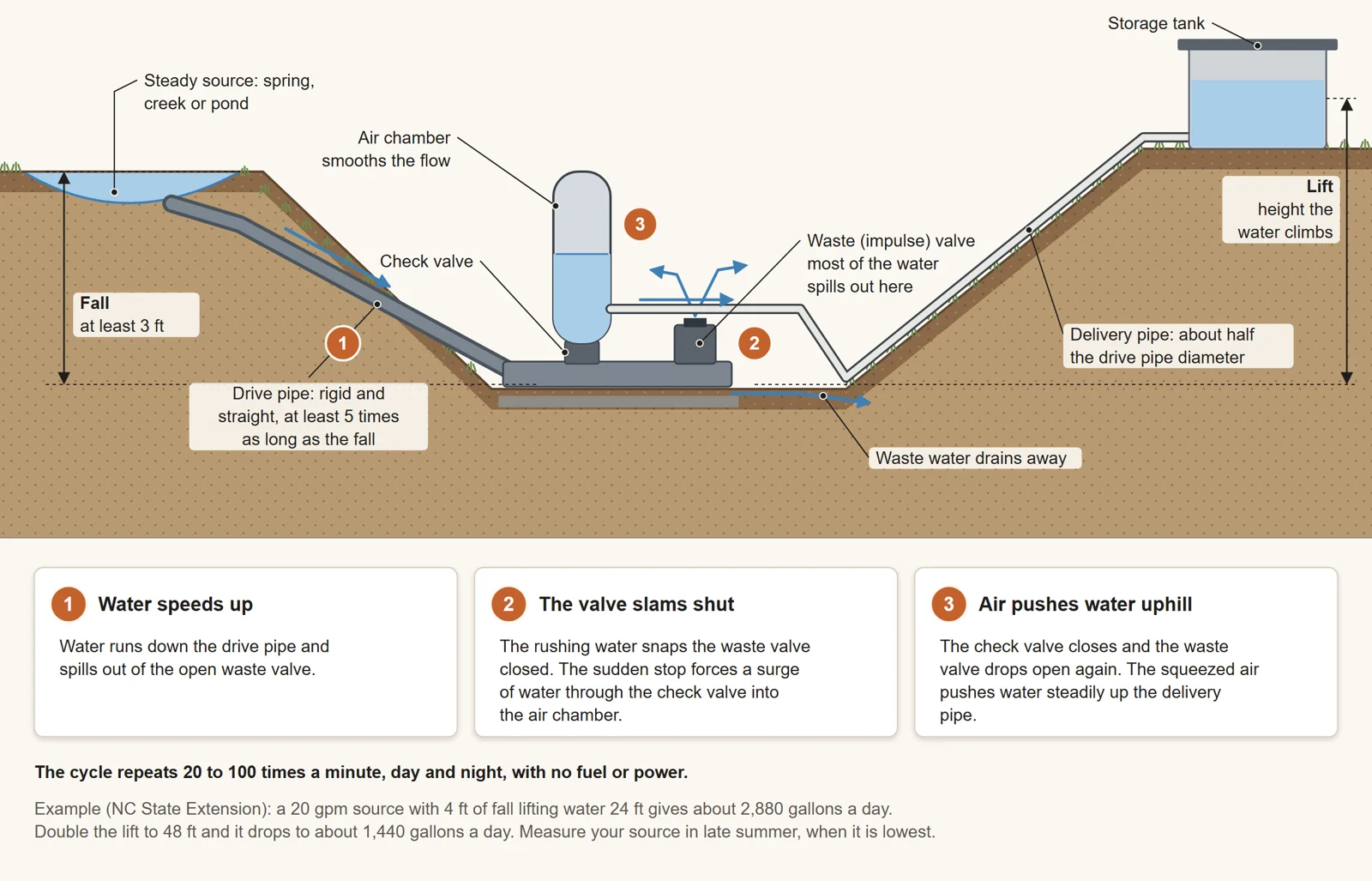
Ram pump schematic
The ram pump, explained
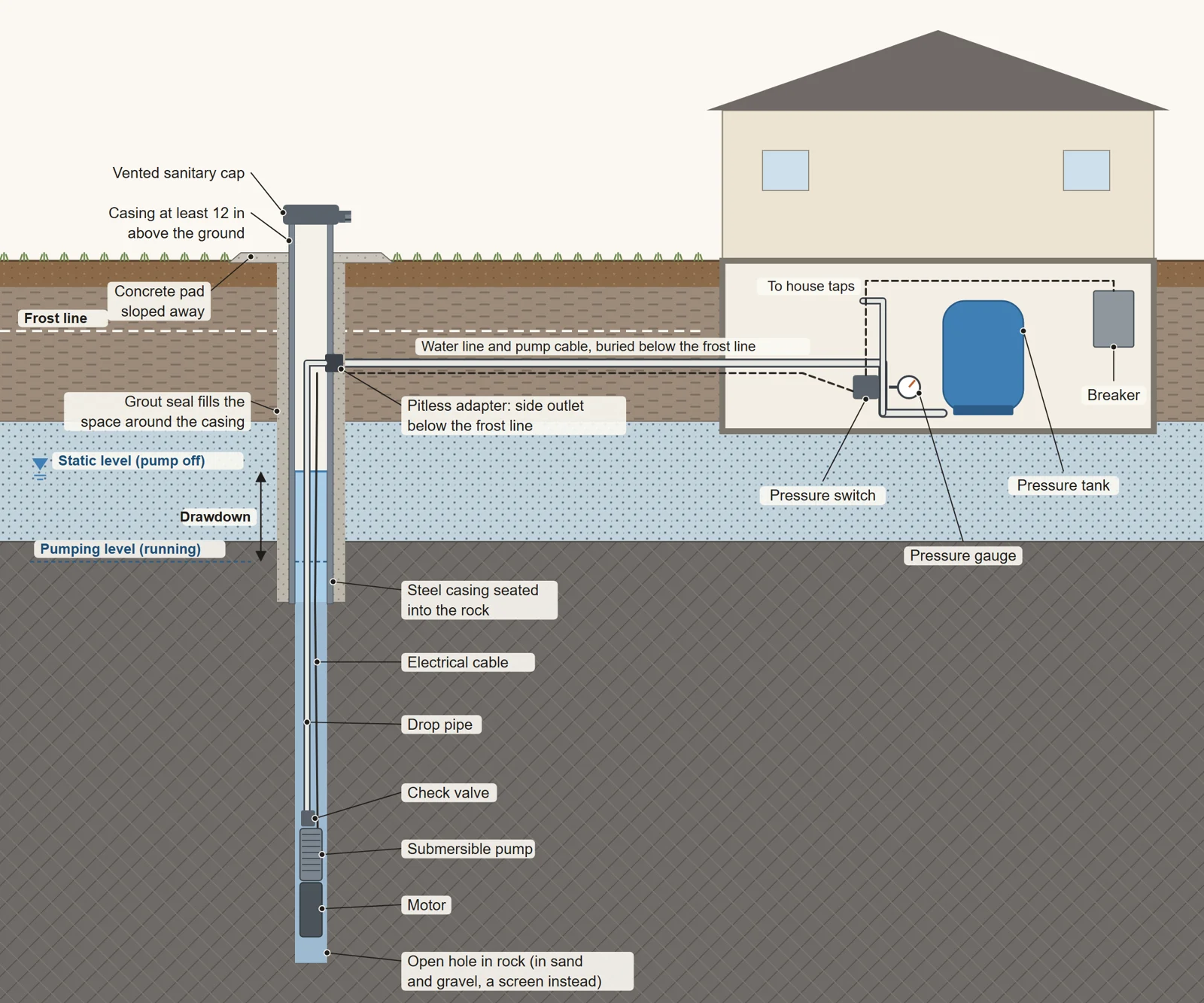
Drilled well anatomy
Every part of a drilled well
Sand point anatomy
Driving a sand point
Pressure tank cutaway
Checking the tank's air charge
After reading it you'll be able to

Walk into any water decision knowing the right questions

  • Pull the well records near your land and read them like a driller would
  • Tell a real water sign from a false hope, and judge how deep you'll likely go
  • Find your state's rules on permits and setbacks in one afternoon
  • Build a sand point, spring box or seep collector with the right materials, in the right order
  • Get three comparable drilling quotes and spot the line items that inflate
  • Diagnose a sick well yourself before anyone sends a bill
  • Chlorinate, test and winterize your well on a schedule
  • Know which help programs exist, and which "grant" calls are scams
A finished spring box on a wooded hillside
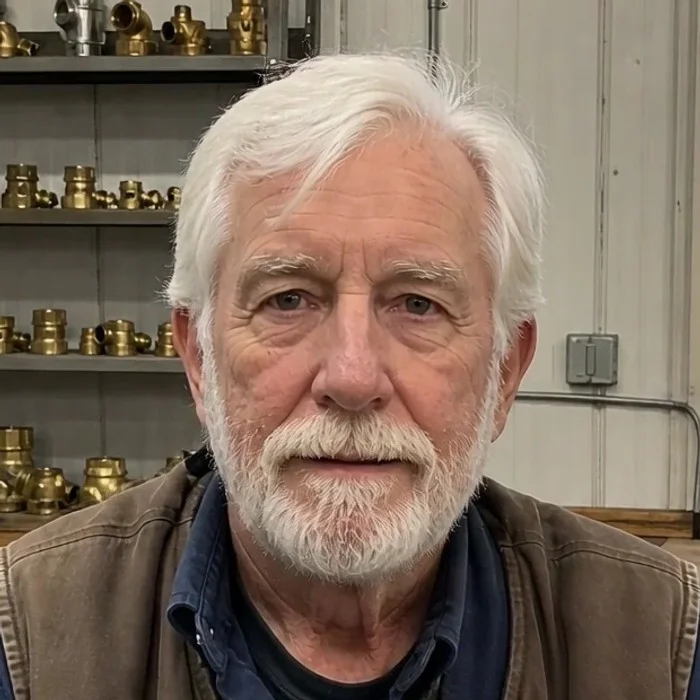
Caleb, host of The Off-Grid Well Finder
Your guide

The book behind the YouTube channel

Caleb is the host of The Off-Grid Well Finder on YouTube, where landowners come to learn about springs, shallow wells, ram pumps and keeping a well healthy. This manual collects those lessons, checked against official sources and organized into one book you can keep by the pressure tank.

"Diagnose before you spend. Most of the money lost on water is lost on fixing the wrong problem."

This book is for you if…

  • You own rural land, or are about to buy some
  • You'd rather understand the job than just pay for it
  • You want shallow water you can reach with your own hands where the ground allows it
  • You have a well and want to stop guessing when something changes

It's not for you if…

  • You want a guarantee there's water under a certain spot. Nobody honest can give you one.
  • You plan to drill a deep well with your own rig. That's a licensed trade in most places.
  • You want one rule for the whole country. Well rules change by state and county, and the book shows you how to check yours.
Water for Life cover
Get your copy

Water for Life

The Complete Rural Water Manual

$32

One payment. Yours to keep, print and reread.

  • 136-page illustrated PDF, US Letter, print-ready
  • 14 technical diagrams and 18 photos
  • 15 chapters in 3 parts: Find It · Get It · Keep It
  • 15-question driller call script and quote checklist
  • Symptom-by-symptom breakdown tree
  • Printable well log and annual maintenance checklist
Get instant access · $32

Secure payment by Stripe · Card, Apple Pay, Google Pay

Instant download after checkout · Works on any computer, tablet or phone

Questions

Frequently asked

Is this a printed book?

It's a digital book (PDF) that you download right after checkout. It's laid out at US Letter size with large type, so it prints cleanly at home or at any print shop, and the checklists are designed to be printed.

I don't have a well yet. Is it still useful?

Yes. Part One is about finding water on your land and Part Two about getting it out of the ground, by yourself where the ground allows it and through a driller where it doesn't. Part Three becomes useful the day you have a well.

I already have a well. Will I learn anything new?

Part Three is built for you: a symptom-by-symptom breakdown tree, the pressure-tank check, step-by-step shock chlorination, testing schedules, dry-well options and the help programs for rural homeowners.

Does it work in my state?

The methods work anywhere. The rules (permits, who may build, setbacks) change by state and sometimes by county, so instead of pretending one rule fits everyone, the book shows you how to find your state's rules quickly and gives real examples from several states.

Can I really build my own well?

For shallow water in the right ground, often yes: sand points, springs and seeps are within reach of a handy landowner, and the book is honest about where each method works and where it doesn't. Deep drilled wells are a job for a licensed driller, and the book shows you how to hire one well.

Will it tell me exactly where to dig?

No book can promise that, and you should be wary of anyone who does. What it does is teach you to read the public records and the land itself, so you can make a far better bet and know your likely depth before you pay anyone.

How do I get the book after paying?

You'll get a download link right after checkout, plus a copy by email.
Good water, for life.

Know where it is, how to get it, and how to keep it, before anyone sends you a bill.

Get the manual · $32
Water for Life · $32Get it